Note: All blog posts on this website are 100% AI generated and has not been fact checked or edited. Do not rely on anything on this website. Instead, use it to learn about the output quality by ZimmWriter.
AIBlogPostWriter
Examples of 100% AI Written Articles by ZimmWriter
AIBlogPostWriter
Examples of 100% AI Written Articles by ZimmWriter

How to Care for a Baby
You’ll feed your baby every two to three hours—yes, even at night—change roughly ten diapers daily, and master the art of decoding cries. Always put them to sleep on their backs in a bare crib, no fluffy stuff allowed. Learn hunger cues like rooting and hand-sucking, and try the five S’s when they’re fussy: swaddle, side position, shush, swing, suck. It’s exhausting but you’ll catch on fast. Stick around to figure out what separates surviving from actually thriving.
Quick Overview
- Feed newborns eight to twelve times daily, watching for hunger cues like rooting and tracking wet diapers for adequate intake.
- Change diapers eight to twelve times daily, cleaning front to back and allowing air drying to prevent rashes.
- Place babies on their backs to sleep on firm mattresses without pillows, blankets, or toys in the crib.
- Recognize baby cues like yawning for tiredness and use soothing techniques including swaddling, shushing, and gentle swinging.
- Build bonding through skin-to-skin contact, responding promptly to cries, and maintaining consistent eye contact during interactions.
Understanding Your Baby’s Basic Needs and Daily Routine
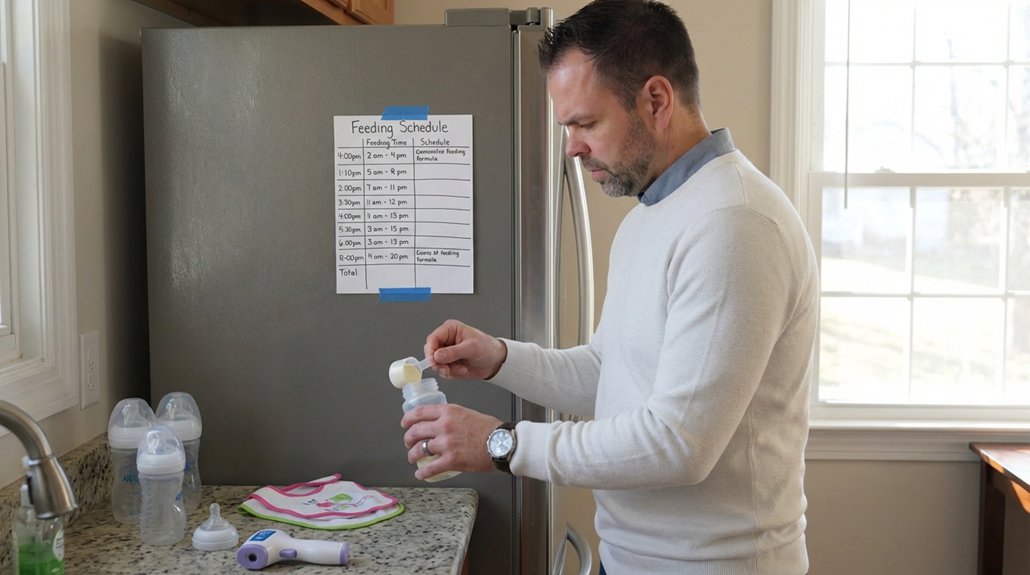
Look, babies aren’t complicated creatures, but they’re incredibly demanding. They need four things: food, sleep, clean diapers, and comfort. That’s it. The tricky part? They need these things constantly, on their schedule, not yours.
Your newborn will eat every two to three hours. Yes, even at 3 AM. They’ll sleep sixteen hours a day, just never when you want them to. You’ll change roughly ten diapers daily—sometimes more if you’re unlucky.
Here’s the thing about routines: babies don’t have them initially. You’ll create one gradually.
Feed, burp, change, sleep, repeat. It’s monotonous. It’s exhausting. But after a few weeks, patterns emerge. You’ll recognize their hungry cry versus their tired cry. That’s progress.
Feeding Your Infant: Breastfeeding, Formula, and Nutrition Essentials

Of all those basic needs, feeding is the one that’ll consume most of your waking hours—and plenty of hours you’d rather be sleeping.
Newborns eat every two to three hours. Yes, around the clock. Do the math—that’s eight to twelve feedings daily.
Breast or bottle? Both work. Breastfeeding is free and convenient once you get past the learning curve. Formula costs money but lets others help with feedings.
Pick what works for your situation and ignore the judgment.
Watch for hunger cues: rooting, sucking on hands, fussiness. Don’t wait for crying—that’s a late sign.
Babies know when they’re full, so let them stop when they’re done. Track wet diapers instead of obsessing over ounces.
Six to eight daily means they’re eating enough.
Diapering, Bathing, and Maintaining Your Baby’s Hygiene
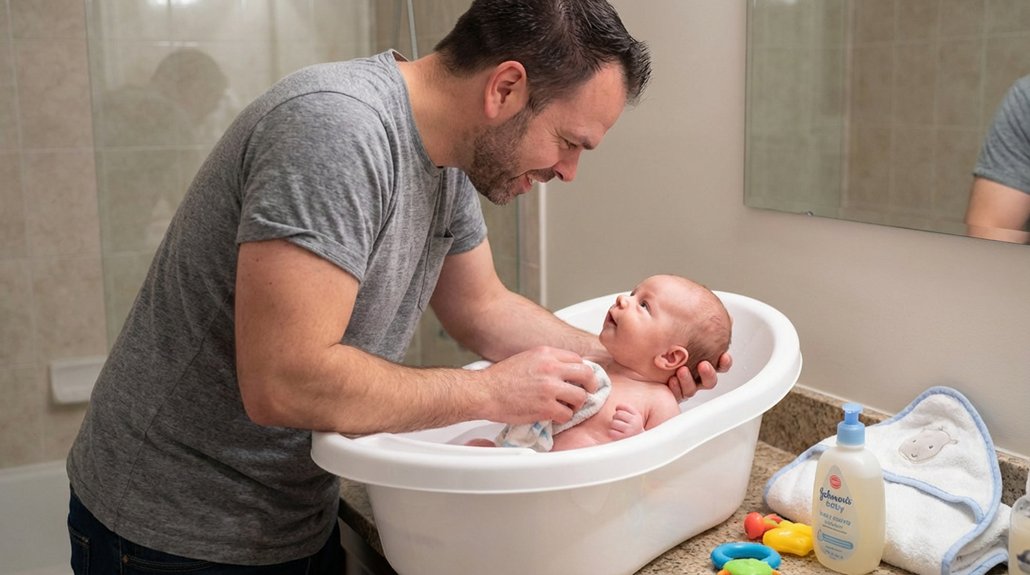
While feeding gets all the glory, diaper duty is where you’ll actually spend the most time in the trenches. You’re looking at 8-12 changes daily. Maybe more if you’re unlucky.
Get the basics down: wipes, diaper cream, a changing pad. That’s it. Don’t overcomplicate this.
For baths, newborns only need two or three per week. Daily baths dry out their skin. Use warm water, support their head, keep it quick. They’ll probably scream anyway.
Here’s what matters: clean the diaper area front to back. Every single time. Let baby air dry when possible—prevents rashes better than any cream.
The hygiene learning curve is steep. You’ll get peed on. Accept it now.
Safe Sleep Practices and Establishing Healthy Sleep Habits

Sleep deprivation will break you faster than anything else in parenting; you’ll hallucinate and you’ll cry over spilled milk—literally.
Here’s what keeps babies alive while they sleep: back sleeping, always, and a firm mattress with no pillows, no blankets, no stuffed animals; yeah, those cute nursery photos on Instagram are death traps.
Room-sharing without bed-sharing is ideal, so keep that baby close but not in your bed, no matter how exhausted you are.
Want better sleep? Establish routines early with the same bedtime and the same steps every night—bath, book, bottle, bed—whatever works, because babies love predictability even if they can’t tell time.
And white noise? It’s magic, because it drowns out your neighbor’s barking dog and mimics the womb’s constant whooshing.
Recognizing Baby Cues, Soothing Techniques, and Building a Strong Bond
Before your baby learns to talk, they’re screaming their needs at you in a language you don’t speak. Fun, right? Learn their cues fast. Rooting means hungry. Yawning means tired. Fists clenched? Overstimulated or gassy.
For soothing, try the five S’s: swaddle, side position, shush, swing, suck. White noise works miracles. So does skin-to-skin contact.
Bonding isn’t some mystical thing. It’s responding when they cry. Making eye contact during feeds. Talking to them like they understand—because they’re learning. Sing badly. Dance awkwardly. They don’t judge.
You’ll mess up. A lot. That’s normal. Babies are resilient, and you’re learning together. Trust your instincts, ask for help when drowning, and remember: you’re enough.
Frequently Asked Questions
When Should I Schedule My Baby’s First Pediatrician Visit?
Schedule your baby’s first pediatrician visit within 3-5 days after leaving the hospital.
Yeah, that soon. Your doctor needs to check weight, feeding, and jaundice levels.
Don’t skip it because you’re tired—newborns can have issues that aren’t obvious to you.
Most pediatricians expect this visit, so call before you even leave the hospital to book it.
They’ll likely squeeze you in fast since they know newborns can’t wait around forever.
What Vaccinations Does My Baby Need in the First Year?
Your baby needs a bunch of shots that first year—way more than you’d think.
You’re looking at vaccines for hepatitis B, rotavirus, DTaP (diphtheria, tetanus, whooping cough), Hib, pneumococcal disease, and polio.
They’ll get multiple rounds at 2, 4, and 6 months, plus some at birth and around their first birthday.
Yeah, it’s a lot of needles. Your pediatrician has the full schedule, so just follow their lead.
When Can I Safely Travel With My Newborn Baby?
Your newborn isn’t a sealed envelope that’ll fall apart in the wind. Honestly? You can travel whenever you’re ready, but most doctors say wait two weeks minimum.
Their immune system’s still building up. Short car trips? Fine. Cross-country flight through germ-factory airports? Maybe hold off.
You’ll know when you’re both ready—trust your gut. Some parents jet off at three weeks; others wait months.
There’s no magic number, just common sense and your pediatrician’s blessing.
How Do I Choose a Reliable Childcare Provider or Daycare?
Visit multiple places unannounced—seriously, just drop by.
You’ll catch the real vibe, not some staged tour. Check licenses and background checks, obviously.
Watch how staff interact with kids. Are they engaged or just babysitting?
Ask tough questions about discipline, illness policies, and staff turnover. Trust your gut.
If something feels off, it probably is. Talk to other parents there. They’ll give you the honest dirt you actually need to hear.
What Baby Gear and Equipment Are Essential Versus Optional Purchases?
a safe sleep space, car seat, and diapers. That’s it.
Everything else? Marketing genius preying on nervous parents. You don’t need a wipe warmer—your baby won’t care.
Skip the fancy bassinet that costs more than your rent. A basic crib works fine.
Bottles if you’re not breastfeeding, obviously. Maybe a carrier so you can actually accomplish something.
The $200 diaper pail? Total scam. Save your money.