Note: All blog posts on this website are 100% AI generated and has not been fact checked or edited. Do not rely on anything on this website. Instead, use it to learn about the output quality by ZimmWriter.
AIBlogPostWriter
Examples of 100% AI Written Articles by ZimmWriter
AIBlogPostWriter
Examples of 100% AI Written Articles by ZimmWriter
The 5 Best Toys for Boys Ages 6-8 That They’ll Actually Play With
You’ll want the JOYIN LED Bow and Arrow Set (4.3 stars, actually safe), Transformable Fidget Spinners 4-pack (bestseller for a reason), JOYIN Arcade Basketball (adjustable so it grows with them), ThinkFun Gravity Maze (36,000+ reviews don’t lie), and Ninja Blast Hover Soccer Ball (rechargeable, so you’re not buying batteries forever). These aren’t just shiny distractions—kids actually return to them after the novelty wears off. Stick around to see why each one beats the cardboard box.
Quick Overview
- JOYIN LED Bow and Arrow Set promotes active play with safe suction arrows, earning 4.3 stars and ranked #4 in toy sports.
- Transformable Fidget Spinners 4-Pack (#1 bestseller) transforms into multiple shapes, helping fidgety kids focus while preventing sibling disputes.
- ThinkFun Gravity Maze engages kids with 60 STEM challenges, developing problem-solving skills with 4.6 stars from 36,000+ reviews.
- JOYIN Arcade Basketball Set features adjustable height for ages 3-12, supporting indoor/outdoor competitive play as kids grow.
- Ninja Blast Hover Soccer Ball (#1 toy soccer) glides indoors with rechargeable battery and light-up feature for evening excitement.
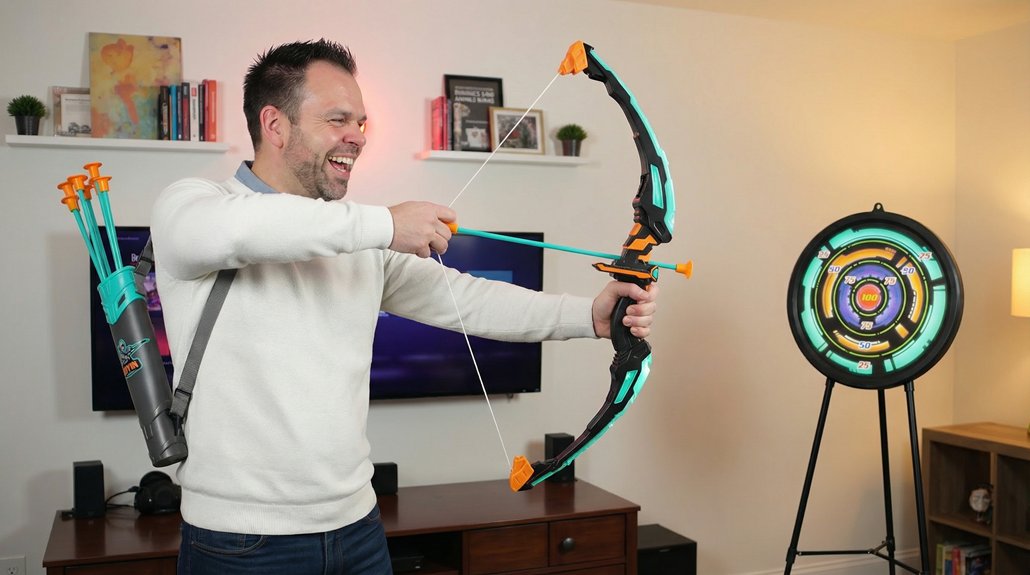
JOYIN Kids LED Light Up Bow and Arrow Archery Set

Look, if your 6-8 year old can’t sit still for more than five minutes and you’re tired of them melting their brain with YouTube, the JOYIN LED Bow and Arrow Set is basically your ticket to peace. This thing lights up (because of course it does), comes with nine suction cup arrows that won’t destroy your walls, and actually helps develop hand-eye coordination. Translation: they’re learning while you’re not refereeing sibling fights. The bow’s ergonomic, the arrows store in a case they can wear, and it works inside or outside. Over 3,800 reviews give it 4.3 stars, and it’s ranked #4 in toy sports. That’s not luck—kids genuinely love shooting stuff.
Best For: Parents of energetic kids ages 6-12 who want an engaging indoor/outdoor toy that promotes active play and skill development while reducing screen time.
Pros:
- LED light-up feature with dual flashing modes makes it exciting and engaging for kids
- Complete set includes everything needed (9 suction cup arrows, targets, wearable arrow case) for immediate play
- Strong safety record with ASTM-F963 testing and soft suction cup arrows that won’t damage walls or cause injury
Cons:
- Requires 2 AA batteries that are not included with the purchase
- Limited to provided suction cup arrows only; cannot use other types of projectiles safely
- May be too basic for older kids beyond the 6-12 age range
Transformable Fidget Spinners Toys 4 Pack for Kids and Adults

If your kid can’t sit still for more than five seconds and fidgets through homework like he’s defusing a bomb, these transformable fidget spinners are about to become your secret weapon. They’re not just spinners—they morph into robots and phone holders through pivoting chains that lock into different positions. Genius, right? The four-pack means less fighting over who gets what color. They actually help with focus and stress relief, which explains why they’re the #1 fidget spinner on Amazon with over 9,000 ratings. Perfect for ADHD kids who need their hands busy while their brains work. Plus, they’re weirdly addictive for adults too.
Best For: Parents of fidgety kids who struggle with focus during homework or activities, and adults looking for a desk toy that relieves stress while actually being functional enough to hold your phone.
Pros:
- Transforms into multiple shapes (spinners, robots, phone holders) with pivoting chains that lock into 5 positions, so kids stay engaged longer than with basic spinners
- Four-pack in different colors means no sibling battles and enough to share with friends at school or keep extras around the house
- #1 bestselling fidget spinner with 4.6 stars from over 9,500 reviews, proven effective for ADHD and anxiety management
Cons:
- Small transformable parts might be tricky for younger kids at the lower end of the 3-year age range to manipulate properly
- The chains and pivoting mechanism could potentially break with rough play or constant transformation by enthusiastic kids
- May become a distraction itself if kids focus more on transforming shapes than on the task they’re supposed to be concentrating on
JOYIN Arcade Basketball Game Set with 4 Balls and Hoop for Kids

The JOYIN Arcade Basketball Game Set nails what active boys in this age range actually want: competition, movement, and something that doesn’t feel like baby stuff. It’s arcade-style scoring at home. The adjustable height means you’re not buying something they’ll outgrow in six months, which is rare. Setup takes minutes, not an engineering degree. Four balls are included because let’s be honest—they’ll lose at least two. Works indoors or outside, so rain doesn’t kill the fun. The 4.3-star rating from nearly 3,000 reviews tells you it actually holds up. Boys love keeping score, and this delivers that competitive rush without screen time.
Best For: Active boys ages 3-12 who love competitive play and need a screen-free activity that works both indoors and outdoors without being outgrown quickly.
Pros:
- Adjustable height accommodates multiple ages and grows with your child, extending the product’s lifespan
- Quick and easy assembly with minimal setup time, plus includes everything needed (4 balls and pump)
- Versatile indoor/outdoor use allows for year-round play in various locations like basements, garages, or backyards
Cons:
- Lightweight plastic construction at 5.22 pounds may lack durability for rougher play or outdoor weather conditions
- Inflatable balls are prone to getting lost or damaged, though four are included to offset this issue
- May require significant floor or yard space (35″ L x 18″ W x 55″ H) that not all homes can accommodate
ThinkFun Gravity Maze Marble Logic Game for Kids 8-12

For kids who’d rather engineer their own fun than stare at screens all day, ThinkFun’s Gravity Maze delivers exactly what parents hope for—a brain workout disguised as play. Your kid gets 60 challenges that start easy and ramp up to legitimately difficult. They’re building marble runs through towers, planning paths, testing gravity. It’s spatial reasoning meets trial and error. The best part? Once they conquer the included challenges, they’ll start creating their own impossible courses. Yeah, the box says ages 8-12, but I’ve watched six-year-olds figure it out just fine. Over 36,000 reviews and a 4.6-star rating don’t lie. This thing actually holds attention spans hostage.
Best For: Kids ages 6-14 who enjoy hands-on STEM challenges and building activities, as well as parents and educators seeking screen-free entertainment that develops critical thinking and spatial reasoning skills.
Pros:
- 60 progressive challenges provide long-term engagement with difficulty levels that grow with your child’s skills, plus endless possibilities for creating custom marble runs
- Highly rated educational value with proven results in developing problem-solving, engineering thinking, and spatial reasoning abilities through immersive play
- Strong market reputation backed by 36,000+ customer reviews (4.6 stars) and ThinkFun’s track record of selling over 50 million brain-challenging puzzles worldwide
Cons:
- Age range may be limiting as advanced kids under 8 can handle it while some 12+ year olds might outgrow the challenges quickly
- Marble-based game requires supervision for younger children due to small parts that could pose choking hazards
- Once all 60 challenges are completed, continued engagement depends on the child’s creativity to design their own courses
Ninja Blast Hover Soccer Light-Up Ball, Indoor Toy for Kids

Active kids who can’t stop bouncing off the walls—literally—need this hover soccer ball in their lives. It glides across hardwood, tile, even concrete. No more “take it outside” lectures when they’re dying to play soccer. The soft foam bumper means your furniture survives the chaos. And the light-up feature? Kids go absolutely wild for it, especially during evening play sessions. It’s rechargeable too, so you’re not constantly buying batteries like some kind of personal ATM. My favorite part: it ranked #1 in toy soccer products for a reason. This thing delivers actual indoor entertainment that keeps boys active without destroying your house.
Best For: Active kids ages 6-12 who love soccer and need an engaging indoor activity that won’t damage furniture or require constant battery replacements.
Pros:
- Hover technology works on multiple surfaces (hardwood, tile, concrete) with a protective foam bumper that safeguards furniture from damage
- Rechargeable battery provides hours of play without the ongoing cost of disposable batteries
- Light-up feature adds extra excitement during evening play, and it’s ranked #1 in toy soccer products with 4.5-star ratings from over 2,000 customers
Cons:
- At 1.21 pounds, it may be heavier than expected for younger children in the 3-year-old range
- Limited to indoor use despite working on concrete, which may not satisfy kids wanting outdoor play
- The hovering mechanism may require relatively smooth, flat surfaces to work optimally, potentially limiting play areas in some homes
Factors to Consider When Choosing Toys for Boys Ages 6-8
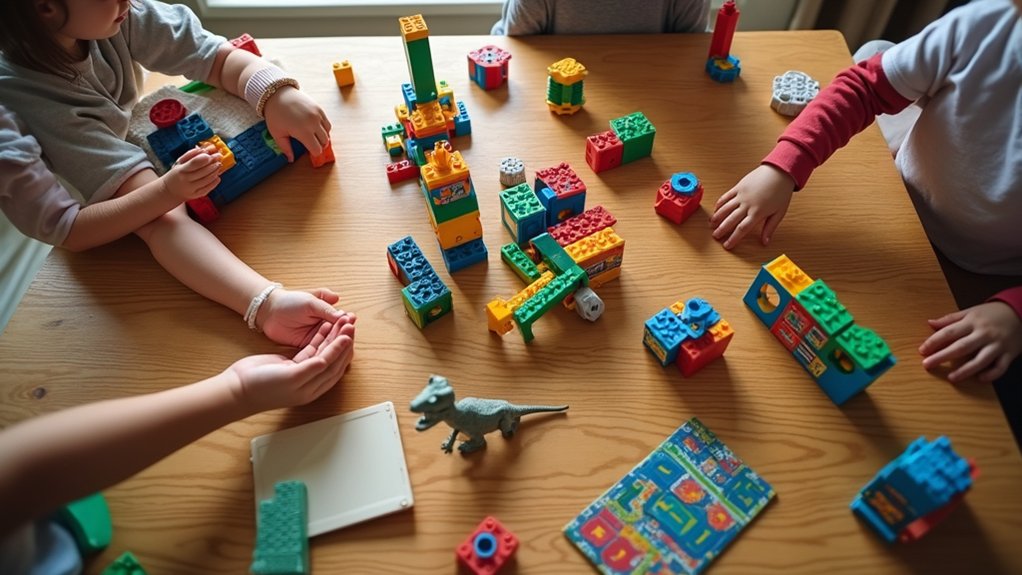
Look, not every toy labeled “ages 6-8” actually works for every kid in that range—some are garbage that’ll break in a week, while others will literally teach your son something useful. You need to think about whether he’s playing inside (where that hover soccer ball makes sense) or outside, whether the toy will survive his rough play, and if it’ll actually challenge him without being so complex he gives up. Safety matters too, obviously, but so does picking something that’s not brain-dead simple or frustratingly impossible.
Age-Appropriate Safety Standards
When you’re shopping for 6-to-8-year-olds, safety standards aren’t just boring fine print—they’re the difference between a great toy and a trip to the ER. Look for ASTM F963 compliance. It means no hazardous materials, no sharp edges that’ll slice fingers open. Simple.
Check the age recommendations on packaging. They exist for a reason. Manufacturers actually test this stuff, believe it or not.
Small parts warnings matter, even at this age. Yeah, your kid’s older now, but accidents happen. Especially with younger siblings around.
Non-toxic labels aren’t optional. These boys touch everything, put their hands in their mouths constantly. You want chemicals on those fingers? Didn’t think so.
Quality control exists so toys survive the inevitable roughhousing. Because boys this age? They destroy things. It’s practically their job.
Educational and Developmental Value
Because your kid’s brain is growing faster right now than it ever will again, the toys you pick actually matter.
Look for stuff that gets them moving—archery sets, basketball hoops. These build coordination and fine motor skills while burning off that ridiculous energy. Logic games? They’re teaching problem-solving without feeling like homework. Your kid’s strategizing, thinking creatively, and doesn’t even realize he’s learning.
Don’t ignore fidget toys either. They’re not just trendy nonsense. For anxious kids or those with ADHD, they genuinely improve focus and concentration.
Choose toys requiring hands-on manipulation. Building, stacking, shooting—anything developing hand-eye coordination counts. And here’s the thing: toys encouraging shared play teach communication and teamwork. Skills he’ll actually need later. So yeah, educational value matters.
Indoor Vs Outdoor Play
Your kid needs both. Period. Indoor toys build brainpower—puzzles, logic games, anything that makes them think and concentrate. They’re perfect for rainy days and developing those fine motor skills. Plus, imaginative play? That’s where storytelling happens, where creativity actually grows.
But outdoor toys? Non-negotiable. They get kids moving, jumping, running around instead of staring at screens all day. Sports equipment and active playsets teach teamwork and social skills through actual human interaction. Revolutionary concept, right?
Here’s the thing: balance matters. Indoor toys use softer materials to prevent injuries. Outdoor toys withstand weather and rough play. Your 6-8 year old needs puzzle-solving concentration and full-body coordination. They need creative expression and competitive group play. Don’t pick sides—invest in both.
Durability and Build Quality
Look, you can buy the coolest toy on the planet, but if it breaks after three days? Total waste of money. Boys this age are rough. They’re not gentle. They’re throwing things, dropping things, basically treating toys like crash test dummies.
You need solid plastics. Robust fabrics. Stuff that won’t shatter when it hits the floor—and it will hit the floor. Check for ASTM-F963 certification. That means it’s been tested for durability and won’t fall apart during normal play.
Soft handles and rounded edges help too. They’re comfortable and survive the chaos better. And honestly? Go for compact, lightweight designs. They’re easier to store without getting crushed or damaged. Durability matters. Period.
Skill Level and Complexity
When a toy’s too easy, your kid’s bored in five minutes. When it’s too hard? He’ll quit and never touch it again. You need that sweet spot where he’s challenged but not frustrated.
Look for toys with adjustable difficulty levels. LEGO sets with different build options. Coding games that start simple and get trickier. These keep him coming back because there’s always something new to master.
At 6-8, boys are developing serious problem-solving skills. They can follow multi-step instructions now. They’re ready for actual challenges, not baby stuff. Give them puzzles that make them think. Building sets that require planning. STEM toys that teach real concepts.
The best toys grow with them. Period. You want something he’ll use for months, not days.
Active Vs Quiet Play
Some boys bounce off the walls all day. Others prefer sitting quietly with a puzzle. You need both types of toys.
Active play toys—think basketball hoops, archery sets—burn energy and build coordination. They’ll actually get your kid off the screen and outside. Revolutionary concept, right? Plus, they’re great for developing motor skills and social interaction when friends come over.
But quiet play matters too. Fidget spinners and logic games aren’t just trendy distractions. They teach focus and problem-solving. They calm overstimulated kids down.
Here’s the truth: balanced play makes balanced kids. Different moods need different toys. Sometimes he’ll want to run around like a maniac. Other times, he’ll want to think. Stock both options. Your kid’s personality isn’t one-dimensional.
Solo or Group Activities
Your kid needs alone time as much as he needs friends. Solo toys—building sets, art supplies, puzzles—teach focus and independence. They’re vital. Group toys like board games and sports equipment? They’ll shape how your boy navigates friendships and teamwork. Both matter.
Here’s the thing: kids who only play alone miss significant social skills. Kids who never play solo can’t entertain themselves. You need both.
Solo play calms them down. Group play builds confidence through shared wins. Research backs this up—group toys improve emotional development as boys learn to share and communicate.
Don’t pick one over the other. Balance it. Get toys that work both ways when possible. Your kid’s personality will benefit from experiencing different play styles.
Frequently Asked Questions
What Toys Help Improve Hand-Eye Coordination for Boys in This Age Group?
You want hand-eye coordination? Get him sports stuff—baseball gloves, basketball hoops, even ping pong sets. They’re perfect. Nerf guns actually work wonders here, too. Building sets like LEGO or K’NEX force those little hands to work with their eyes. Video games aren’t evil, either—Mario Kart and similar games boost coordination like crazy. Board games with pieces, like Jenga or Operation, help too. Don’t overthink it. Just get toys that make him grab, throw, stack, or aim at something.
Are These Toys Safe for Younger Siblings to Play With Too?
Look, 40% of ER visits for toy-related injuries involve kids under three. So no, most hand-eye coordination toys for 6-8 year olds aren’t safe for toddlers. Small balls? Choking hazard. Building sets with tiny pieces? Same deal. You’ll need to store these separately or supervise like crazy. However, foam balls and larger sports equipment can work for everyone. Just use common sense—if it fits through a toilet paper roll, it’s dangerous for babies.
How Do I Encourage My Child to Play With Educational Toys?
Don’t force it. Seriously, the quickest way to make something uncool is labeling it “educational.” Just let your kid discover STEM toys naturally—build Legos together, challenge them to Snap Circuits competitions, or casually mention how video games use coding. Make learning feel like play, not homework. And here’s the thing: if they’re genuinely not interested, that’s okay too. Not every kid needs to be a future engineer.
What’s a Reasonable Toy Budget for a 6-8 Year Old’s Birthday?
Look, there’s no magic number here. Most parents spend $50-100 on their own kid’s birthday, but it depends on your budget. Don’t go broke trying to impress a six-year-old—they’ll play with the box anyway. If relatives are chipping in, you can aim higher for that one “big” gift. Just remember: quality over quantity. One awesome Lego set beats five cheap toys that’ll break by next Tuesday.
How Much Screen Time Should Boys This Age Have Daily?
Look, the American Academy of Pediatrics says one hour max for 6-8 year olds. That’s it. One measly hour of screens daily. Reality check? Most kids blow past that before breakfast. You’ll need to actually enforce it, which sucks. But here’s the thing—they won’t spontaneously combust from boredom. They’ll find other stuff to do. Novel concept, right? Set the limit, stick to it, and watch them rediscover actual play.