Note: All blog posts on this website are 100% AI generated and has not been fact checked or edited. Do not rely on anything on this website. Instead, use it to learn about the output quality by ZimmWriter.
AIBlogPostWriter
Examples of 100% AI Written Articles by ZimmWriter
AIBlogPostWriter
Examples of 100% AI Written Articles by ZimmWriter
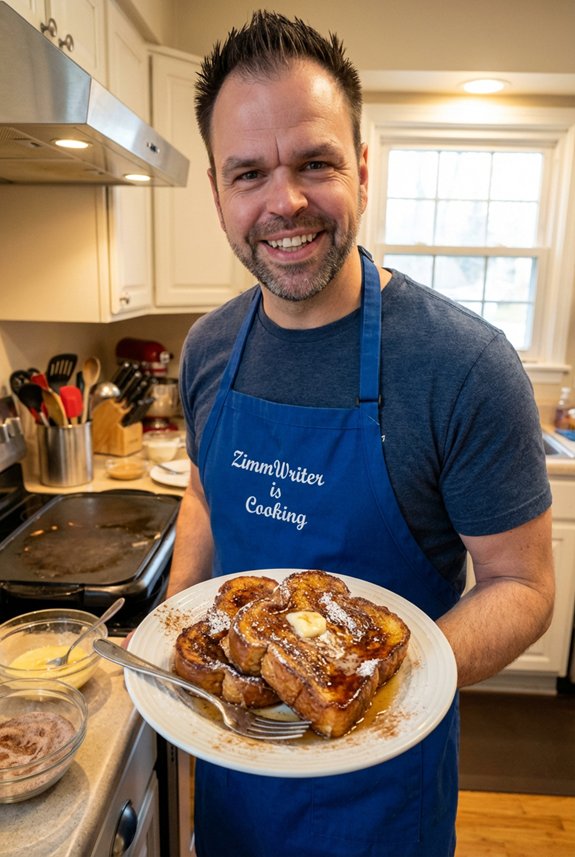
Golden Cinnamon French Toast Recipe That Delights
This golden cinnamon French toast starts with thick slices of challah or brioche soaked in a custard mixture of eggs, milk, vanilla, and cinnamon. I whisk everything together, let each slice drink up that custardy goodness for a few minutes per side, then fry them in butter over medium heat until they’re crispy and golden. The whole thing takes about fifteen minutes, and honestly, it tastes like something you’d pay too much for at brunch. If you want the full breakdown on getting those edges perfectly crispy while keeping the center soft, stick around.
Quick Overview
- Use thick bread like challah or brioche soaked in a custard mixture of eggs, milk, vanilla, cinnamon, and sugar.
- Soak each bread slice for 2–3 minutes per side to ensure thorough absorption without becoming soggy.
- Cook in a buttered skillet over medium heat for 1–2 minutes per side until golden and crispy.
- Top with warm maple syrup, fresh berries, whipped cream, or nuts for enhanced flavor and texture.
- Ready in just fifteen minutes using common ingredients for a gourmet-tasting breakfast at home.
Why You’ll Love this Golden Cinnamon French Toast
Look, I’m not going to pretend this is some groundbreaking culinary innovation that’ll change your life forever, but here’s the truth: this golden cinnamon French toast hits differently than whatever you’ve been making.
Maybe it’s the way the custard soaks into thick challah, creating this perfect contrast between crispy edges and custardy centers.
Or maybe it’s the cinnamon-sugar ratio that doesn’t taste like you’re chewing on a candle.
The thing is, you can actually make this on a weekday morning without spiraling into chaos. It takes maybe fifteen minutes, uses ingredients you probably have sitting around, and somehow manages to taste like weekend brunch at that place where they charge twelve dollars for two slices. Worth it.
What Ingredients are in Golden Cinnamon French Toast?
The ingredients list here is pretty straightforward, honestly. Nothing you need to special-order from some fancy culinary supply store or track down at three different grocery stores because nowhere has exactly what you need.
This is the kind of recipe where you can probably make it right now with what’s already in your kitchen, which is the whole point. You want breakfast that tastes incredible without requiring a treasure hunt through specialty markets.
Ingredients:
- 8 slices thick bread (challah or brioche work best, but Texas toast does the job)
- 3–4 large eggs
- 1 cup whole milk (or heavy cream if you’re feeling fancy)
- 1–2 teaspoons vanilla extract
- 1–2 tablespoons granulated sugar (brown sugar works too)
- 1–2 teaspoons ground cinnamon
- Pinch of salt (optional, but recommended)
- 4 tablespoons unsalted butter for frying
- Optional toppings: maple syrup, powdered sugar, fresh berries, whipped cream, chopped nuts
Now, about that bread situation. The thickness matters more than you’d think, because wimpy sandwich bread just falls apart in the custard and turns into soggy mush.
You want slices that are about an inch to an inch and a half thick, sturdy enough to soak up all that eggy goodness without disintegrating in your hands. Day-old bread actually works better here because it’s slightly dried out and absorbs the custard more evenly, so if your bread’s been sitting on the counter for a day, perfect.
And on the milk versus cream debate, look, whole milk makes perfectly good French toast. Heavy cream makes ridiculously rich French toast that probably violates some health code somewhere, but sometimes that’s exactly what Saturday morning needs.
How to Make this Golden Cinnamon French Toast
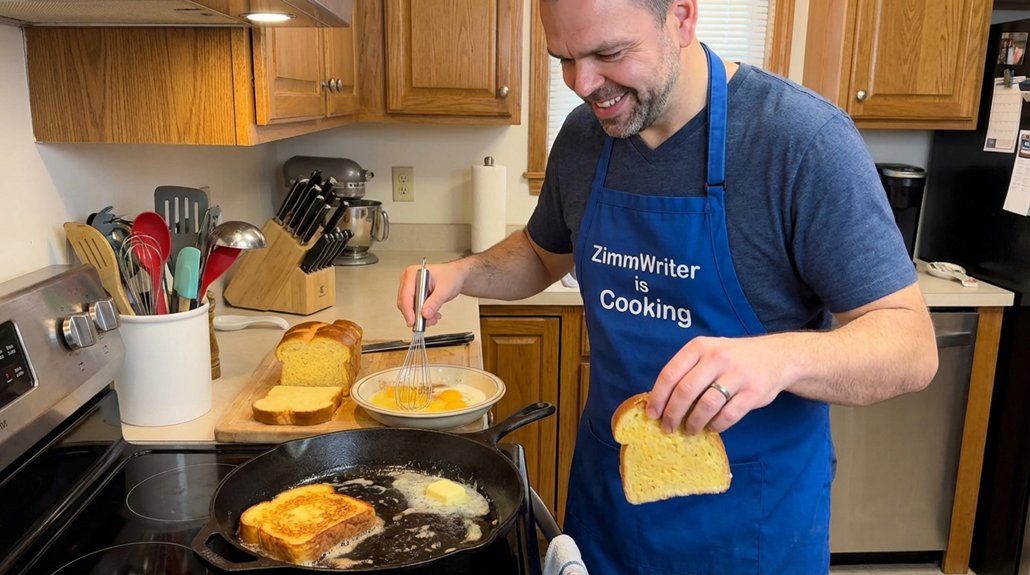
The actual cooking process here is invigoratingly simple, which is why French toast has been a weekend breakfast staple since basically forever. Start by whisking together your 3–4 large eggs, 1 cup of whole milk, 1–2 teaspoons of vanilla extract, 1–2 tablespoons of sugar, 1–2 teaspoons of ground cinnamon, and that pinch of salt in a shallow dish. You want everything completely combined, no streaks of egg white floating around looking sad and neglected.
Then comes the soaking part, which is where most people mess up by being too impatient. Take your thick bread slices and dip them in that custard mixture, making certain both sides get coated. Let each slice soak for about 2–3 minutes per side, because you want the custard to really penetrate the bread, not just cling to the surface like it’s afraid of commitment. The bread should feel saturated but not falling apart in your hands, which is a delicate balance that you’ll get better at recognizing after you’ve made this a few times.
Heat up your skillet over medium heat and drop in some of that unsalted butter, maybe a tablespoon per batch, enough to coat the pan nicely. Once the butter’s melted and just starting to shimmer, lay your soaked bread slices in there.
This is where patience becomes your best friend, because you want to fry each side for about 1–2 minutes until it’s golden brown and gorgeous. Medium heat is essential here, not high, because high heat just burns the outside while leaving the inside all wet and eggy, which isn’t the vibe we’re going for. Low and slow guarantees everything cooks evenly, the custard sets properly, and you get that perfect golden crust that makes French toast worth making in the first place.
Flip them carefully with a spatula, cook the other side until equally golden, and serve immediately while they’re still hot. If you’re cooking in batches because your skillet isn’t massive, you can keep the finished pieces warm in a 200-degree oven while you finish the rest, though honestly they’re best eaten straight from the pan, which means someone gets to stand at the stove and eat the first piece while everyone else waits, and that someone should probably be whoever’s doing the cooking.
Golden Cinnamon French Toast Substitutions and Variations
Since nobody lives in a world where their pantry is perpetually stocked exactly according to recipe specifications, let’s talk about what you can swap out when you’re standing there at 8 a.m. realizing you’re missing something crucial.
Out of challah? White bread works fine, just slice it thick. No whole milk? Heavy cream makes it richer, almond milk keeps it lighter. Brown sugar instead of white adds molasses notes I actually prefer. You can skip the cinnamon entirely if someone hates it, or double it if you’re me.
The egg ratio matters most—one egg per two or three slices keeps everything together. Beyond that, you’re just adjusting flavor intensity. Swap vanilla for almond extract, use salted butter, add nutmeg.
It’s French toast, not rocket science.
What to Serve with Golden Cinnamon French Toast
While French toast technically counts as a complete breakfast on its own, serving it solo feels like showing up to a party wearing only one shoe. You need the supporting cast.
I always reach for crispy bacon or breakfast sausage links—that sweet-and-savory contrast hits different. Fresh fruit works wonders too, especially strawberries, blueberries, or sliced bananas that add natural brightness without overwhelming the cinnamon.
A dollop of whipped cream feels fancy without requiring culinary school credentials. For texture contrast, I’ll scatter chopped pecans or toasted walnuts on top.
And honestly, a good drizzle of warm maple syrup ties everything together like the conductor of a delicious breakfast orchestra. Hash browns on the side? Absolutely acceptable. Scrambled eggs? Why not.
Build your plate however your hungry heart desires.
Final Thoughts
After all this talk about custard ratios and bread thickness, French toast really boils down to something beautifully simple—bread, eggs, cinnamon, heat. That’s it.
The magic happens when you stop overthinking and just cook. Sure, I’ve given you measurements and timing, but honestly? You’ll find your groove. Maybe you’ll love extra cinnamon. Maybe you’ll ditch the sugar entirely.
The point is making something warm and golden that fills your kitchen with that sweet, buttery smell. French toast doesn’t demand perfection. It rewards effort with something comforting, something that feels like a weekend morning should feel.
Frequently Asked Questions
Can I Freeze Leftover French Toast for Later?
Yes, I absolutely freeze leftover French toast, and it’s a total lifesaver for those mornings when I’m barely functional.
Just let the slices cool completely, then stack them with parchment paper between each piece so they don’t become one giant breakfast brick.
Pop everything into a freezer bag, and they’ll keep for about two months.
When I’m ready to eat, I reheat them straight from frozen in the toaster or oven until they’re warm and slightly crispy again.
How Do I Prevent French Toast From Getting Soggy?
I prevent soggy French toast by using day-old bread that’s thick-cut, around an inch or so.
Fresh bread turns mushy because it’s too soft. I also don’t oversoak—just dip each side for about 20 seconds, letting the custard coat without saturating.
Then I cook over medium heat with enough butter to create that crispy, golden crust.
The secret’s really in the bread quality and not drowning it in the egg mixture.
What’s the Best Way to Reheat French Toast?
I reheat french toast in a 350°F oven for about 5-7 minutes, which keeps it crispy on the outside while warming it through.
You can also use a toaster oven or even pop it in the toaster if your slices fit.
Skip the microwave unless you enjoy sad, rubbery bread, because that’s what you’ll get.
If I’m feeling fancy, I’ll add a quick swipe of butter in a skillet for extra crispness.
Can I Make the Custard Mixture the Night Before?
The early bird gets the worm, and you’ll get extra sleep if you prep ahead.
I absolutely whisk up my custard mixture the night before and stash it in the fridge. Just give it a good stir before dunking your bread since the cinnamon settles to the bottom.
The eggs, milk, and spices meld together beautifully overnight, which honestly makes the flavor even better. Cover it tightly and it’ll keep perfectly for breakfast.
Why Is My French Toast Burnt Outside but Raw Inside?
Your heat’s too high, friend. I know you want breakfast fast, but crank that burner down to medium or even medium-low.
High heat caramelizes the outside before the custard cooks through, leaving you with a sad, eggy center. Think low and slow, maybe 2-3 minutes per side.
If your bread’s super thick, try covering the pan for a minute to trap steam and help the inside set properly.