Note: All blog posts on this website are 100% AI generated and has not been fact checked or edited. Do not rely on anything on this website. Instead, use it to learn about the output quality by ZimmWriter.
AIBlogPostWriter
Examples of 100% AI Written Articles by ZimmWriter
AIBlogPostWriter
Examples of 100% AI Written Articles by ZimmWriter

Smart Strategies to Boost Your Intelligence
You can actually get smarter—intelligence isn’t fixed, it’s malleable. Start by learning diverse subjects beyond your comfort zone, because variety creates new brain connections. Get seven to nine hours of sleep, exercise regularly, and ditch the junk food that’s literally tanking your cognitive performance. Challenge yourself daily with languages, chess, or complex problems—not mindless scrolling. Have real conversations with diverse people who’ll challenge your thinking. These fundamentals matter more than any brain-training app, and there’s a deeper method to making them work.
Quick Overview
- Diversify learning across multiple disciplines like philosophy, physics, and economics to create new neural pathways and enhance cognitive flexibility.
- Prioritize seven to nine hours of quality sleep, regular exercise, and brain-boosting nutrition including omega-3s and antioxidants.
- Challenge your brain daily through deliberate practice like learning languages, playing chess, or solving complex puzzles.
- Develop critical thinking by actively solving real problems rather than overthinking, starting with small practical tasks.
- Engage in meaningful conversations and debates with diverse people to expand perspectives and strengthen cognitive abilities.
Embrace Lifelong Learning Through Diverse Knowledge Acquisition

Look, if you think intelligence is something you’re born with and that’s that, you’re wrong.
Your brain’s actually pretty malleable. It changes based on what you feed it.
Here’s the deal: you need to learn stuff outside your comfort zone.
Read about philosophy, then switch to quantum physics. Watch documentaries on ancient civilizations. Listen to podcasts about economics. Whatever.
The point? Your brain creates new connections when you expose it to different fields. It’s not rocket science.
Stop binge-watching the same garbage every night.
Pick up a book about something you know nothing about. Take that random online course. Learn a language, study art history, immerse yourself in neuroscience.
Variety matters. Your intelligence literally depends on it.
Optimize Your Brain Health With Sleep, Exercise, and Nutrition

While you’re stuffing your brain with knowledge, you’re probably ignoring the basics that actually make it work.
Sleep deprivation? You’re literally making yourself dumber. Your brain consolidates memories during sleep—skip it, and you’re wasting your study time. Aim for seven to nine hours.
Exercise isn’t just for gym bros. It increases blood flow to your brain, grows new neurons, and improves memory. Even a 20-minute walk counts.
And nutrition matters more than you think. Your brain runs on glucose, needs omega-3s, and craves antioxidants. Junk food isn’t just bad for your waistline—it’s bad for your IQ.
Stop treating your brain like it runs on willpower alone. It’s an organ. Feed it, rest it, move it.
Practice Deliberate Mental Challenges and Cognitive Training
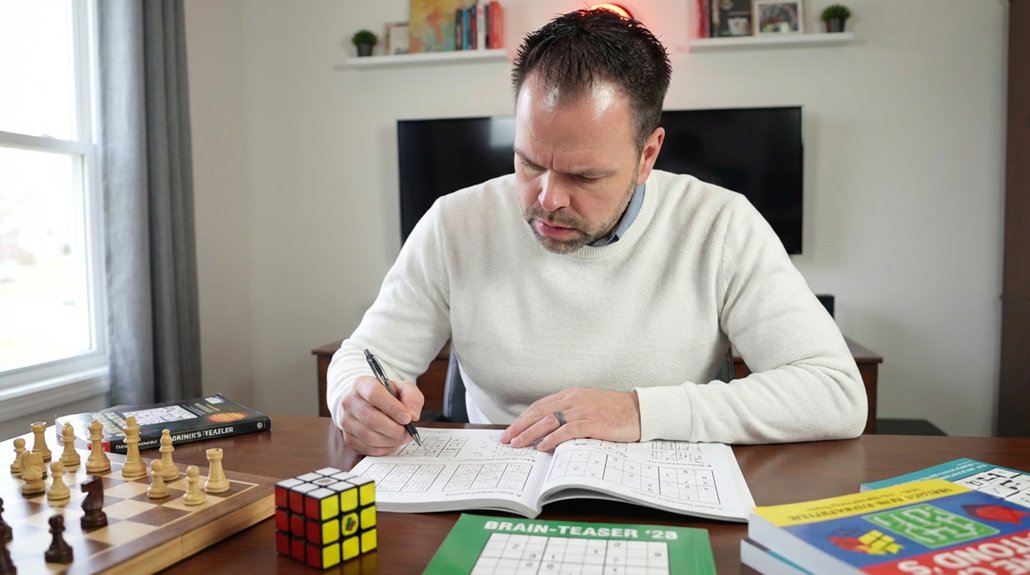
Your brain isn’t a muscle, but it acts like one—use it or lose it. Challenge yourself daily. Learn that language you’ve been putting off. Pick up chess. Solve puzzles that actually make you think.
Here’s the thing: scrolling social media doesn’t count. Your brain needs real resistance training, not mindless scrolling.
Try deliberate practice—stuff that’s uncomfortable and pushes your limits. Learn programming. Study philosophy. Play an instrument. The discomfort means you’re growing.
Brain training apps? They’re okay, but nothing beats genuine learning. Read complex books. Have challenging conversations. Tackle problems outside your comfort zone.
Stop coasting. Your intelligence isn’t fixed—it’s malleable. But you’ve got to work for it. No shortcuts here.
Develop Critical Thinking Through Active Problem-Solving
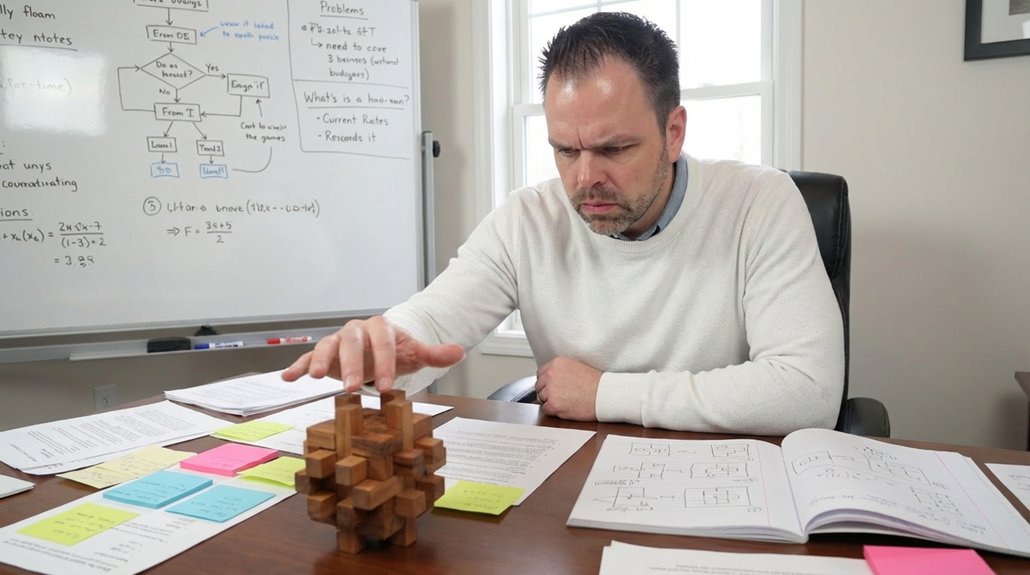
Thinking hard isn’t the same as thinking well. You can spend hours spinning your wheels and get nowhere. Critical thinking means solving actual problems, not just worrying about them.
Start small. Fix things around your house. Debug code. Plan a trip on a tight budget. Real constraints force creative solutions.
Here’s the thing: you can’t develop critical thinking by reading about it. You’ve got to do it. Tackle puzzles that make you uncomfortable. Work through math problems. Analyze why your favorite team lost.
The best part? Every problem you solve builds your mental toolkit. You’ll start recognizing patterns everywhere. Your brain literally rewires itself.
Stop overthinking. Start problem-solving. That’s how intelligence actually grows.
Build Strong Social Connections and Engage in Meaningful Conversations

If you think intelligence is a solo sport, you’re missing half the game. Your brain actually gets sharper when you’re bouncing ideas off other people.
Real conversations—not scrolling through comments—force you to think on your feet, defend your opinions, and consider perspectives you’d never encounter alone.
Here’s the thing: debating politics with your uncle at dinner does more for your cognition than another Netflix binge.
Join a book club. Find people who challenge your assumptions. Argue about movies, ethics, whatever. The discomfort means you’re growing.
Social isolation literally shrinks your brain.
Meanwhile, diverse friendships expand your mental models and expose you to new ways of thinking.
Stop being a hermit. Your intelligence depends on it.
Frequently Asked Questions
Can Intelligence Be Measured Accurately With IQ Tests Alone?
No way. IQ tests measure specific skills—pattern recognition, logic, processing speed—but they’re not the whole picture.
You could bomb an IQ test and still be brilliant at reading people, creating art, or solving real-world problems. They don’t capture emotional intelligence, creativity, or street smarts.
Think about it: Einstein would’ve scored differently than a master negotiator, but both are crazy intelligent.
IQ tests are useful, sure, but they’re just one narrow snapshot.
At What Age Does Brain Development Peak for Cognitive Abilities?
peak doesn’t mean it’s downhill from there.
You can keep building cognitive skills your entire life if you actually try.
Do Genetics Play a Larger Role Than Environment in Determining Intelligence?
environment can push you way up or drag you way down.
Rich kids get tutors, books, good schools. Poor kids? Not so much.
Twin studies prove genes matter, but your surroundings aren’t just background noise.
They’re literally shaping your brain every single day.
How Long Does It Take to See Measurable Improvements in Intelligence?
Your brain isn’t some overnight microwave meal—it’s a slow cooker.
You’ll notice sharper focus and memory within 2-3 weeks of consistent effort, like daily reading or learning new skills.
Real, measurable IQ gains? That’s a 3-6 month commitment minimum.
Here’s the deal: small wins come fast, but you’re rewiring decades of neural pathways.
Stick with challenging activities regularly. Push yourself.
The improvements compound, but patience isn’t optional here.
Are There Any Risks or Downsides to Cognitive Enhancement Techniques?
Yeah, there are definitely downsides. You can burn out hard if you’re obsessively brain-training for hours daily.
Some nootropics mess with your sleep or give you anxiety—not worth it. Plus, you might neglect other important stuff like relationships or physical health while chasing IQ points.
There’s also this weird pressure where you’ll feel dumb if you’re not constantly “optimizing.”
Moderation’s key. Don’t become that person who can’t enjoy life without tracking their cognitive performance.